
Strategies For Academic Recovery
A Comprehensive Guide to Finding and Winning Scholarships, Fellowships, and Research Funding
A low CGPA does not define your academic potential. Many students improve their performance by changing their study habits, managing their time effectively, and developing a growth-oriented mindset. Recovery is a process, and it starts with consistent, intentional effort.
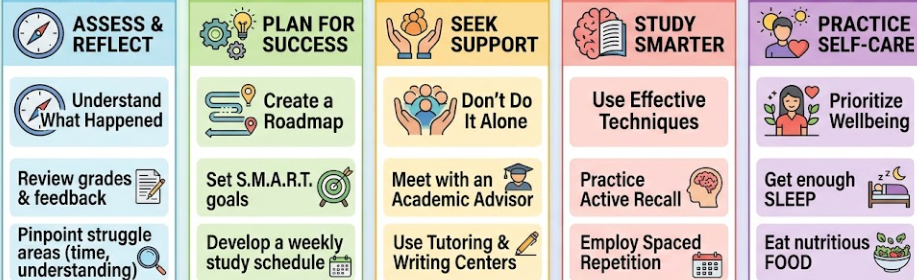
1. Identify the Root Cause
Reflect on why your grades declined. Common reasons include poor time management, ineffective study methods, lack of motivation, personal challenges, or the burden of too many commitments. Understanding the cause helps you choose the right solution.
2. Set Realistic Academic Goals
Break large goals into smaller, achievable targets. Instead of aiming to “raise my CGPA,” focus on goals such as attending every lecture, completing weekly assignments early, or improving your score in one difficult course.
3. Use Proven Study Technique
Active Recall: Test yourself rather than simply rereading your notes.
Spaced Repetition: Review material at increasing intervals to strengthen memory.
Pomodoro Technique: Study for 25–50 minutes followed by a short break to maintain focus.
Practice Questions: Reinforce concepts by solving past papers and quizzes.
4. Manage Your Time Effectively
Create a weekly study schedule, prioritise important tasks, and avoid last-minute cramming. Consistent daily study sessions are more effective than long, irregular study marathons.
5. Seek Academic Support
Ask lecturers for clarification, join study groups, attend tutoring sessions, and make use of campus learning resources. Seeking help early can prevent small misunderstandings from becoming major obstacles.
6. Develop a Growth Mindset
View setbacks as opportunities to learn rather than evidence of failure. Celebrate small improvements and remember that consistent progress leads to lasting academic success.
7. Take Care of Your Well-being
Adequate sleep, regular exercise, healthy eating, and stress management all contribute to better concentration, memory, and overall academic performance.
Final Thoughts
Academic recovery is a gradual process, not an overnight transformation. By combining effective study techniques with disciplined habits and a resilient mindset, you can steadily improve your grades and rebuild your confidence. Progress may be slow at first, but consistent effort is the key to long-term success.